

Material Landscapes presents a dialogue between the Monuments of the Memory – Landscapes series by Paolo Canevari and the Literary Landscapes series by Peter Wüthrich—two artists whose approaches are deeply different, yet unexpectedly aligned through the notion of landscape as an expanded field of meaning.
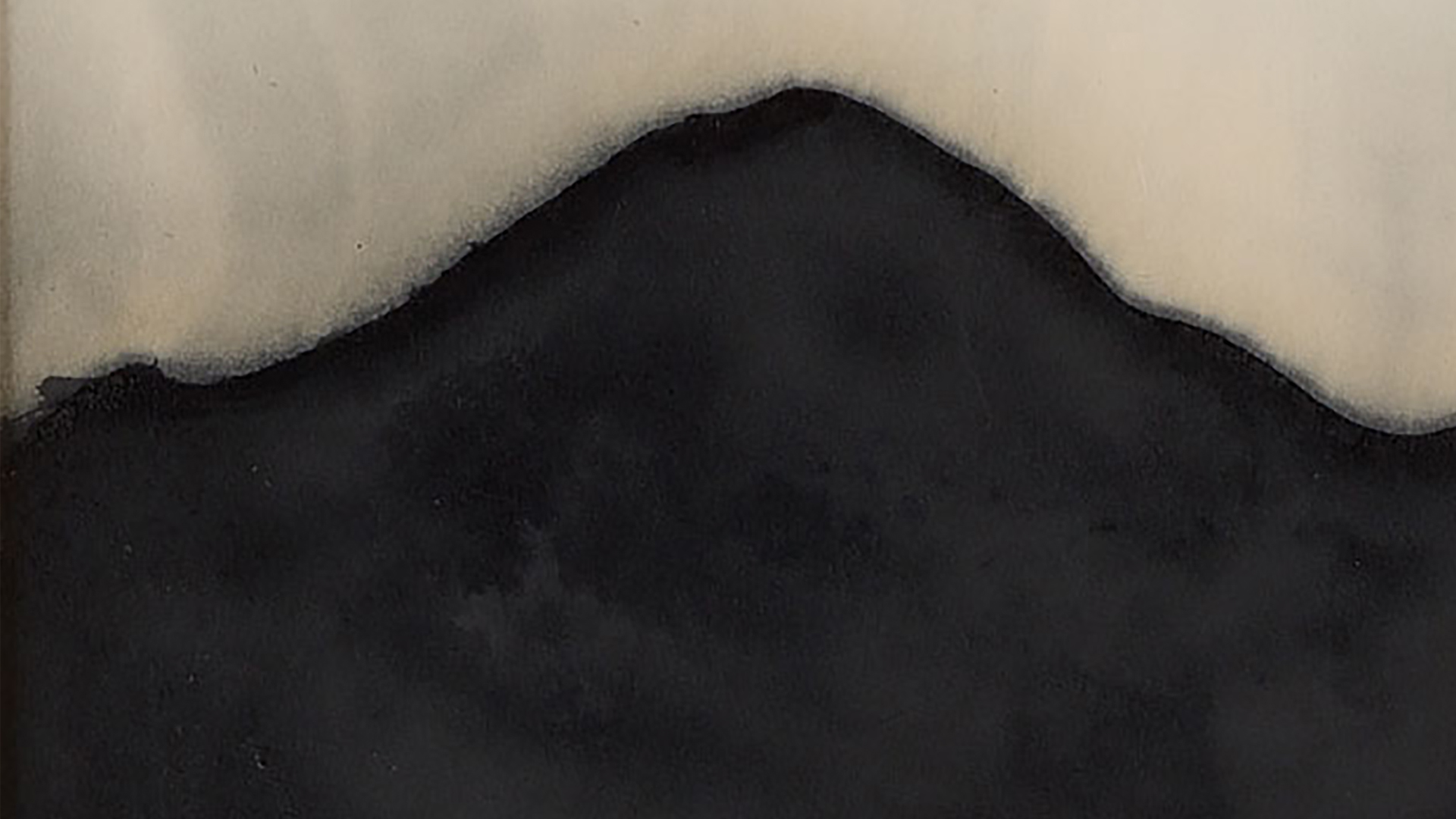
Paolo Canevari, Monuments of the Memory, Landscapes. A detail In Monuments of the Memory – Landscapes, Paolo Canevari develops works on paper using burned engine oil, a material drawn directly from industrial waste and pollution. Applied to blank pages, old books, recovered prints, and sheets, the oil spreads by osmosis, forming dark, stratified horizons, hilly terrains, and suggestive cosmic visions. These landscapes evoke black holes, dark matter, and unstable geographies, where the stain becomes both image and concept. Canevari’s use of pollution is not merely environmental, but symbolic: a reflection on the contamination of nature, information, and thought, and on the way excess and saturation slowly permeate everyday life. Canevari’s work is rooted in a continuous dialogue with artistic tradition and human history. Through the use of raw, charged materials combined with poetic and political tension, his practice establishes a dialectic between opposing forces—heaviness and lightness, solidity and fragility, permanence and ephemerality—where material presence carries profound conceptual weight. In contrast, Peter Wüthrich constructs his landscapes through acts of subtraction and transformation. Using found, multi-colored book covers, often dissociated from their original function, Wüthrich treats the book as both object and metaphor. In the Literary Landscapes series, books are no longer vehicles for reading but become pictorial terrains, where painted horizons and chromatic rhythms emerge from the material body of literature. Text recedes, leaving space for contemplation, memory, and imagination. Wüthrich’s landscapes do not illustrate stories; they evoke the silent geography formed by reading itself. Balancing visibility and disappearance, presence and absence, his works transform literature into a place that can be entered not through words, but through vision. Together, Canevari and Wüthrich reveal landscape as a mutable and unstable construct—one shaped by material, history, and perception. Despite their divergent practices, both artists propose landscapes as spaces where memory accumulates, meaning shifts, and the visible world is continuously reconfigured.


On view:
Aug 29 - Nov 3, 2024

Details
Likes:
Opening:
August 29th_h.14-20.00
On view:
August 30th_November 3rd, 2024
Artists:
Insights
PRESS RELEASE:
Leave a Reply